
A path from understanding the evidence to thinking carefully about action.
Start with our guides


- The evidence for climate change — Understand what instruments measure and how records are interpreted.
- Climate change issues — Explore the consequences of a warming world.
- Climate of change — Consider progress, obstacles and the questions that remain.
- Your carbon footprint — Learn how everyday activities connect to emissions.
- Climate action — Move from a general intention to a decision you can evaluate.
Explore the film
An Inconvenient Truth, twenty years on considers a landmark in climate communication. Pair it with our guide to assessing impact.
A reading notebook
For each article, record the main claim, the evidence offered, the publication date and one question to investigate. Distinguish reported measurements from scenarios and opinion. Look for corrections and updated information when reading older material.
Use this list in a learning session or read recent articles.
Primary sources to keep alongside the guides
- IPCC Sixth Assessment Synthesis Report: a starting point for understanding how a large scientific assessment organises evidence, uncertainty and response options.
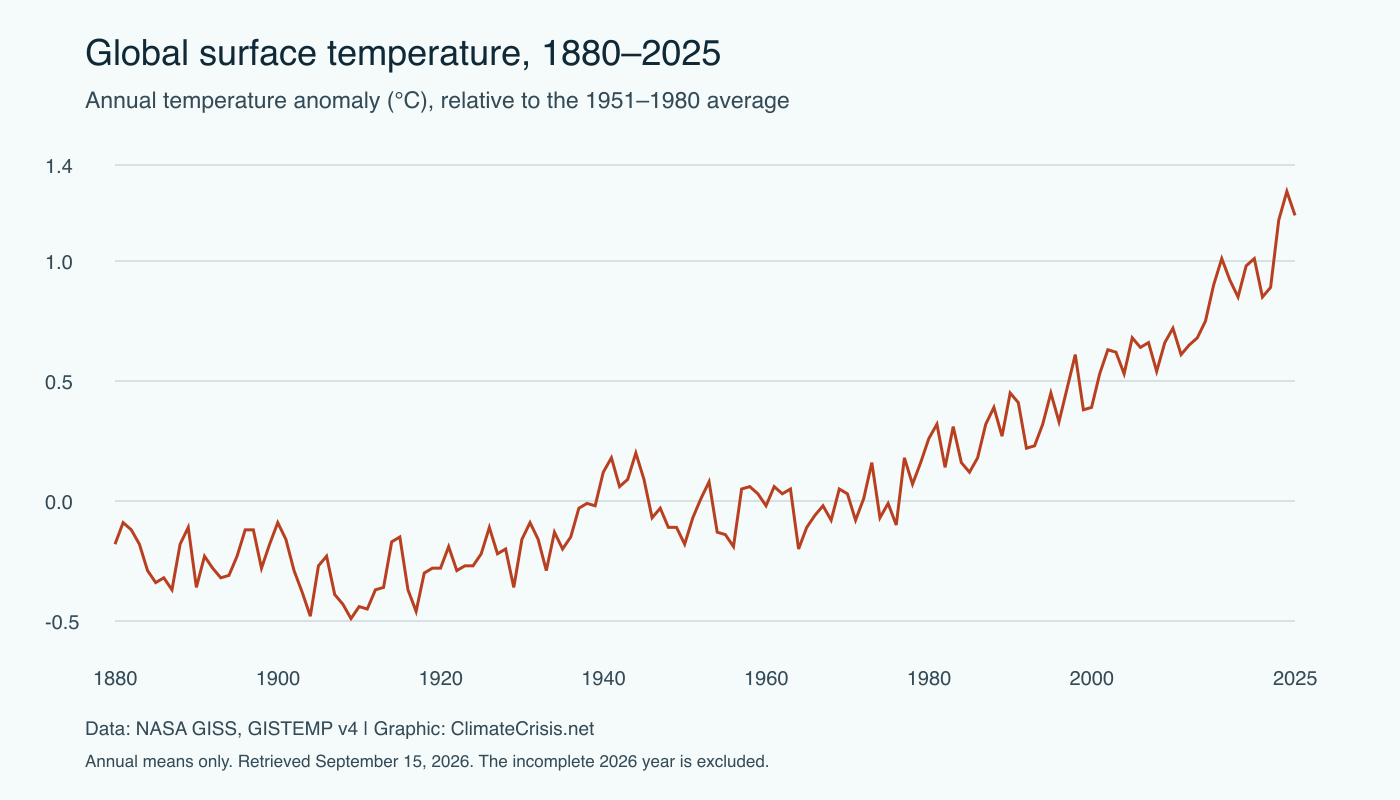
- NASA GISS surface temperature analysis: explore the dataset notes and the baseline behind the temperature record.
- IEA Energy and AI: background for reading claims about computing infrastructure and electricity demand.
- US EPA heat island resources: definitions and measurement questions for urban heat.
Choose a route through the material
If you are new to the subject, begin with the evidence guide and write down unfamiliar terms before moving to impacts. If you are evaluating a specific news claim, go directly to its named source and check the date, units and assumptions. If you are planning an action, record your own starting point before looking for an estimated saving.
A source can be authoritative for one question without answering another. A temperature dataset describes measurements; it does not by itself choose a household purchase or establish the effect of a particular policy. Use each source for the question its method addresses.
Return to older reading with context
Keep the publication date in your notes. A historical book or film can be valuable for understanding communication at the time, but a present-day numerical claim should point to the relevant current record. This list is a learning route rather than an endorsement of every statement in every linked publication.