
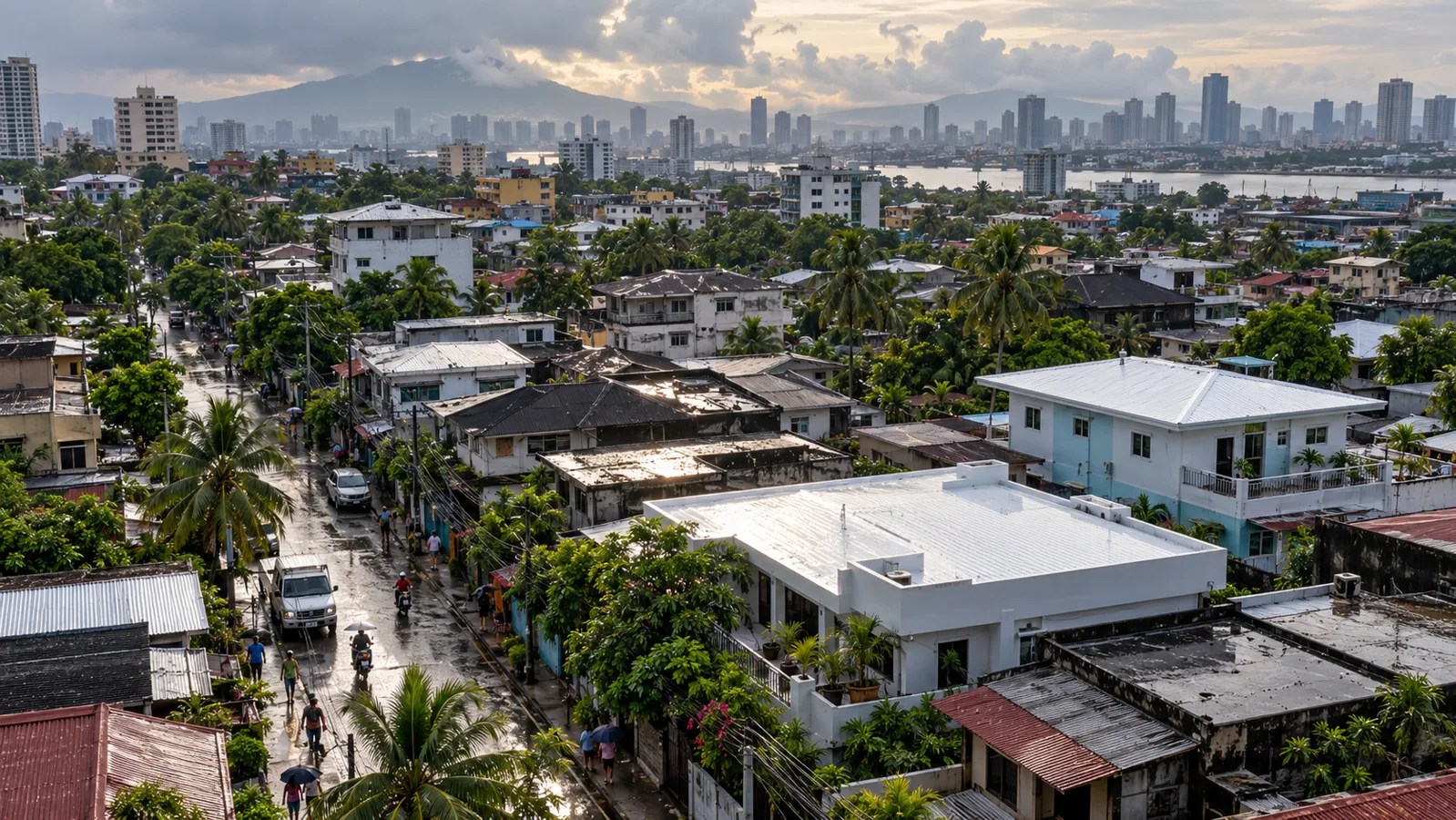
In a tropical city, the roof is often the building surface most exposed to direct sun. A cool roof uses a surface with high solar reflectance and, usually, high thermal emittance so that less solar energy becomes heat in the building.
This can lower roof-surface temperature and reduce heat flow indoors. It cannot remove moisture from humid air, guarantee comfort in every room or substitute for a well-maintained cooling system.
What a cool roof changes
The U.S. Department of Energy’s guide explains the two key properties: solar reflectance, the fraction of sunlight reflected, and thermal emittance, the ability to release absorbed heat. Higher values generally mean a cooler sunlit surface.
The indoor effect depends on the roof assembly. A top-floor room under an uninsulated dark metal roof may see a meaningful reduction in daytime heat gain. A heavily insulated building with little roof area relative to floor area may see a smaller whole-building effect.
Humidity is a separate load
Air conditioners in hot, humid climates do two jobs: lower air temperature and remove moisture. A reflective roof reduces sensible heat entering from above, but it does not directly dehumidify outdoor air or moisture entering through ventilation and leaks.
That distinction matters when occupants feel uncomfortable even after the roof is cooler. Shading, efficient air conditioning, moisture control, air sealing and appropriate ventilation still matter. The Department of Energy notes that natural ventilation is less effective as a cooling strategy in hot, humid climates than in places with cool, dry nights.
Where the benefit is likely to be greatest
- Low-rise buildings with large roof area.
- Poorly insulated roofs exposed to strong sun.
- Top-floor occupied spaces.
- Buildings with substantial daytime cooling demand.
- Neighborhoods where many roofs can reduce peak heat gain together.
Benefits may be smaller where roofs are shaded, insulation is already strong, the building is rarely cooled, or the roof surface quickly becomes dirty and loses reflectance.
Durability and maintenance matter
A product’s initial reflectance is not its lifetime performance. Tropical roofs face rain, biological growth, dust, standing water and strong ultraviolet exposure. Buyers should look for aged performance data, compatibility with the existing roof, drainage requirements, warranty terms and a realistic cleaning plan.
A coating also cannot repair structural corrosion, failed waterproofing or unsafe roof details. Those problems should be assessed before application.
Cool roofs and city heat
At neighborhood scale, reflective surfaces can complement shade trees, green space and reduced waste heat. But the urban heat island is produced by many surfaces and activities. One roof changes one part of the energy balance.
A useful evaluation compares indoor temperature, cooling electricity and comfort before and after installation while accounting for weather and occupancy. Surface temperature alone shows that the roof is cooler; it does not prove the size of the energy saving.
A practical decision checklist
- Inspect roof condition, waterproofing and drainage.
- Identify existing insulation and occupied spaces below.
- Check tested initial and aged reflectance.
- Estimate savings using local weather and operating schedules.
- Plan cleaning and recoating.
- Pair the roof with shading, efficient cooling and moisture control.
Cool roofs are a practical heat-reduction measure for many tropical buildings. Their value is clearest when the building physics, humid-climate limits and maintenance needs are evaluated together.
At city scale, roof measures should sit alongside the warning and response roles described in our heat action plan guide.
Featured image: AI-generated editorial illustration by ClimateCrisis Editorial. It does not depict a specific place, project or event.